
Kraft paper vs white paper is one of the first decisions in almost every paper packaging project, and one of the most frequently misunderstood. Both are paper. Both are recyclable. Both can carry. But they behave differently on the press, in the bag, and on the shelf — and the difference is not only color.
This guide separates the two materials by process, performance, and application, so the choice is made on requirements rather than on a mood board.
The Short Answer
Kraft paper is unbleached (or lightly bleached) paper made with the sulfate process, known for high tear strength, a natural brown tone, and a lower cost. White paper is bleached to a high brightness, which improves print fidelity and gives a cleaner look at the cost of strength, yield, and price.
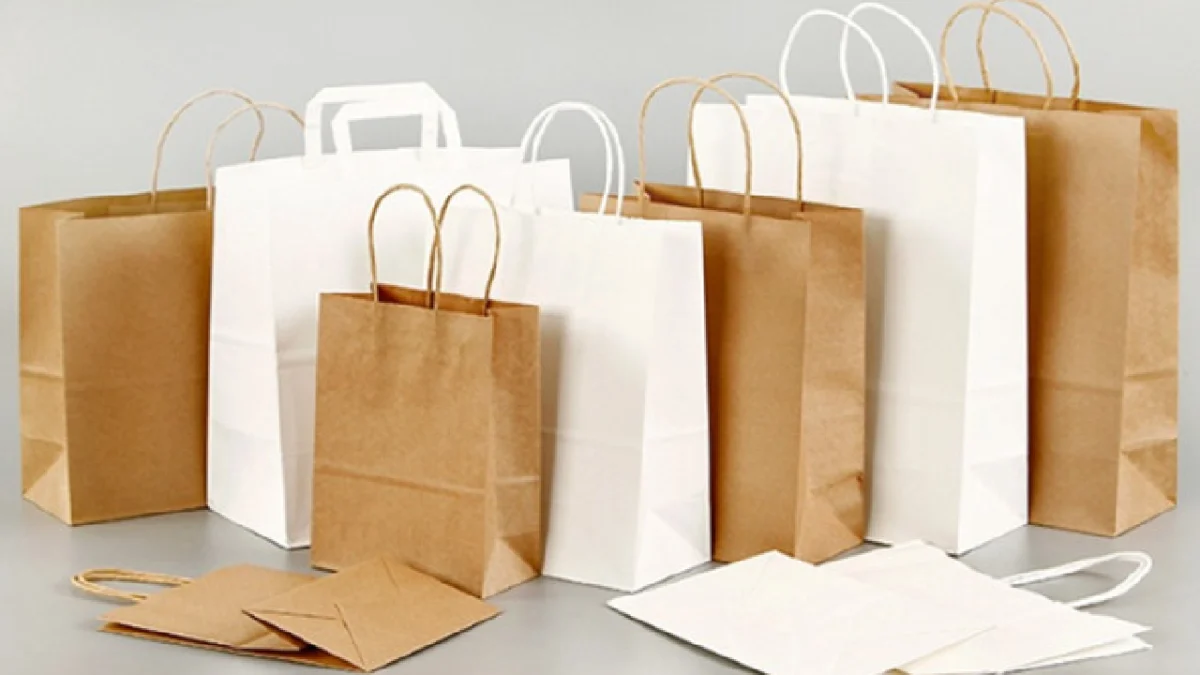
“White kraft” sits between the two: a bleached kraft sheet with kraft-like strength.
At a Glance
| Property | Kraft | White |
|---|---|---|
| Color | Natural brown | Bright white |
| Strength at equal grammage | Higher tear and burst | Lower |
| Print fidelity | Warm shift, ink-hungry | Accurate color, fine detail |
| Typical cost | Lower | Higher |
| contact | Suitable, taint risk | Suitable, low odor |
| Recyclability | Yes | Yes |
What the Names Actually Mean
The confusion starts with the vocabulary.
Kraft refers to the kraft (sulfate) pulping process, which produces strong long-fiber pulp. The familiar brown color comes from leaving the lignin in rather than bleaching it out. So “kraft” describes a process and a fiber, not simply a shade — although in retail language it has become shorthand for “brown paper.”
White paper is bleached pulp, usually to 80–90% brightness. Bleaching removes lignin and residual color, which makes the sheet brighter, more uniform, and better for four-color printing.
White kraft is bleached kraft pulp — strong like kraft, white like bleached paper, and priced accordingly.
Bleached vs unbleached is the real distinction. A brown recycled sheet and an unbleached kraft sheet are both “brown,” but only one has kraft’s fiber strength.
Strength and Durability
Unbleached kraft generally wins on mechanical performance:
- Tear resistance — longer, less damaged fibers give kraft a higher tear strength at the same grammage.
- Burst strength — kraft bags resist puncturing and bursting better, which matters for takeaway bags carrying hot, heavy.
- Wet strength — neither is waterproof, but kraft holds up better to condensation and grease before it fails.
White paper can be strengthened with wet-strength additives or a higher grammage, but that erodes its cost advantage. For a bag that has to survive a delivery ride, kraft is usually the safer base sheet — which is why most wrapping paper for burgers, sandwiches, and fried is still kraft.
Print and Branding
White paper is the better print substrate:
- Color fidelity — white board reproduces brand colors accurately; kraft shifts them warm and dulls blues and greens.
- Contrast — fine type, QR codes, and small legal text read more cleanly on white.
- Ink coverage — kraft absorbs more ink, so solid areas look mottled and require heavier coverage.
Kraft has its own advantage: it reads as natural, unbleached, and premium in the right category. Bakeries, coffee roasters, and burger brands use the brown tone as part of the identity rather than fighting it. The practical rule is to design for kraft (few colors, bold shapes, generous negative space) or choose white when the artwork depends on accurate color.
Contact and Safety
Both materials can be food-safe, but the details matter more than the color.
- Virgin fiber is the default for direct contact in most markets; recycled fiber is restricted or requires documented decontamination.
- Bleaching does not make paper unsafe — modern elemental-chlorine-free (ECF) bleaching is standard, and both bleached and unbleached sheets are used in packaging.
- Grease resistance comes from the coating or treatment, not the base sheet. A “greaseproof” claim depends on the barrier, and PFAS restrictions are changing which treatments are acceptable.
- Odor and taint — unbleached kraft has a characteristic woody smell that can migrate into sensitive products such as chocolate, tea, and butter.
For dry, wrapped, or short-contact foods, both work. For aromatic or long-shelf-life products, test for taint before committing.
Cost
Kraft is usually cheaper per tonne and per square meter:
- Higher pulp yield — less material is lost in bleaching;
- Lower chemical and energy cost;
- Less expensive finishing for natural-tone work.
White paper carries the bleaching premium, and white kraft carries both the bleaching and the strength premium. Print costs can reverse the gap: white may need fewer passes to hit a color target, while kraft sometimes needs a white underlayer or extra coverage.
Sustainability
Both are recyclable, and both are typically made from wood fiber that can be certified.
The honest comparison: bleaching has a chemical and energy footprint, but unbleached kraft is not automatically the greener choice. What matters more is fiber sourcing (FSC or PEFC), recycled content where food-contact rules allow it, grammage (the lightest sheet that performs), and whether the pack is actually collected.
Kraft’s natural tone also avoids the deinking burden of heavily printed white paper — but a kraft bag printed with four colors loses that advantage.
Grammage, Caliper, and Cost per Use
Buyers often compare the two materials on price per tonne, which flatters white paper more than it should. Compare cost per use instead.
- Grammage (gsm) is the weight of the sheet; caliper is its thickness. A kraft sheet often matches a heavier white sheet on tear strength, so the cheaper material can also be the lighter one.
- Yield — lower grammage means more bags per tonne, which matters more than the headline price at volume.
- Print passes — white may need fewer passes to hit a brand color; kraft may need a white underlayer, which erases part of its cost advantage.
- Failure cost — a burst bag in a delivery costs more than the difference between the two sheets.
The right comparison is a filled, sealed bag that has survived the actual distribution route, priced per thousand units.
Which One Where
| Application | Better choice | Why |
|---|---|---|
| Burger and sandwich wraps | Kraft | Grease resistance and tear strength |
| Bakery bags and boxes | Kraft or white | Kraft for rustic, white for premium print |
| Takeaway carrier bags | Kraft | Strength per gram |
| Coffee cups | White board | Print quality and brightness |
| Retail and fashion bags | White | Color fidelity |
| Dry goods and flour bags | Kraft | Strength and cost |
| Chocolate and tea wraps | White, low-odor | Taint risk with kraft |
The same logic runs through paper bags: kraft for takeaway and delivery loads, white where the bag is a retail object and the print is doing the selling.
How to Choose
- Define the load and the ride. Weight, grease, and delivery time point to kraft.
- Decide what the print must do. Accurate brand color points to white.
- Check the food-contact route. Direct contact, taint sensitivity, and local rules.
- Compare at equal performance. A heavier white sheet is not cheaper than kraft.
- Test the actual sheet. Print proofs and filled samples reveal what datasheets hide.
Common Myths
“Kraft is always unbleached.” White kraft is bleached kraft — same strength, different color.
“White paper is coated.” Brightness comes from bleaching, not coating. Coating is a separate decision.
“Kraft is more sustainable because it’s brown.” Color is not a sustainability metric; sourcing, grammage, and end-of-life are.
“White paper is stronger.” Usually the opposite at equal grammage.
FAQ
Is kraft paper stronger than white paper?
Generally yes at the same grammage, because unbleached kraft fibers retain more length and strength.
Can white paper be used for packaging?
Yes. Bleached paper is widely used for contact, subject to the same compliance and migration requirements as kraft.
Is white kraft the same as kraft?
It is bleached kraft pulp: kraft strength with a white appearance, at a higher price.
Which prints better, kraft or white?
White. It reproduces color accurately and holds fine detail; kraft shifts colors warm and absorbs more ink.
Is kraft paper recyclable?
Yes, and so is white paper. Recyclability depends on coatings, laminates, and the collection system, not on the base color.
Which is better for takeaway bags?
Kraft, in most cases. It carries more load at the same grammage and handles grease and condensation better than an uncoated white sheet.
The Bottom Line
Kraft and white paper are the same family with different finishing: one keeps its lignin and strength, the other trades some of both for brightness and print fidelity.
Choose kraft when the pack has to survive handling and the brand can live with a natural tone. Choose white when the artwork depends on accurate color. And test both with the real product before the specification is signed — the difference that matters is rarely the one visible on a swatch.