
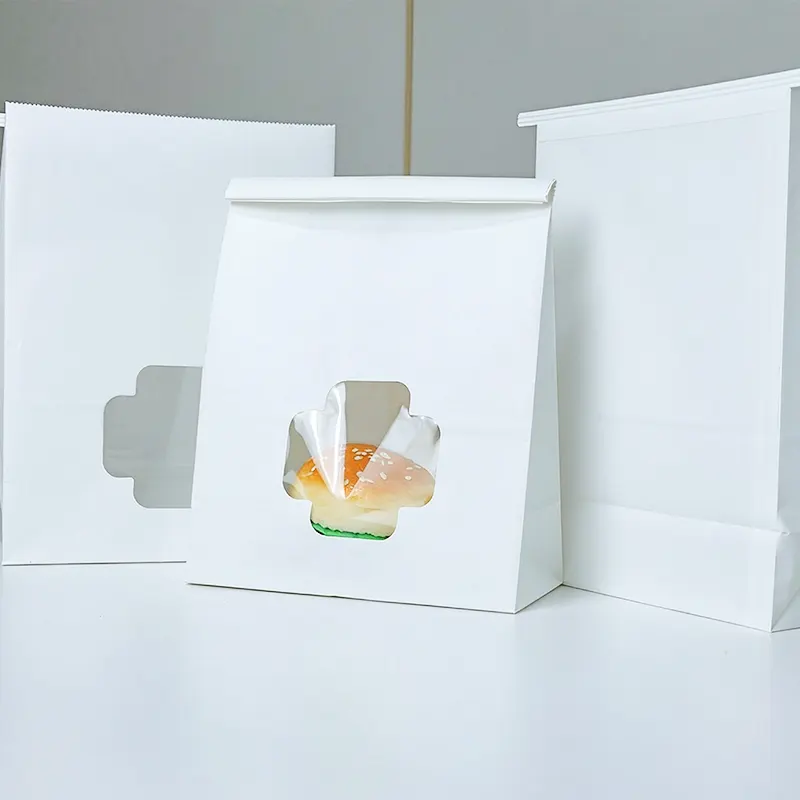
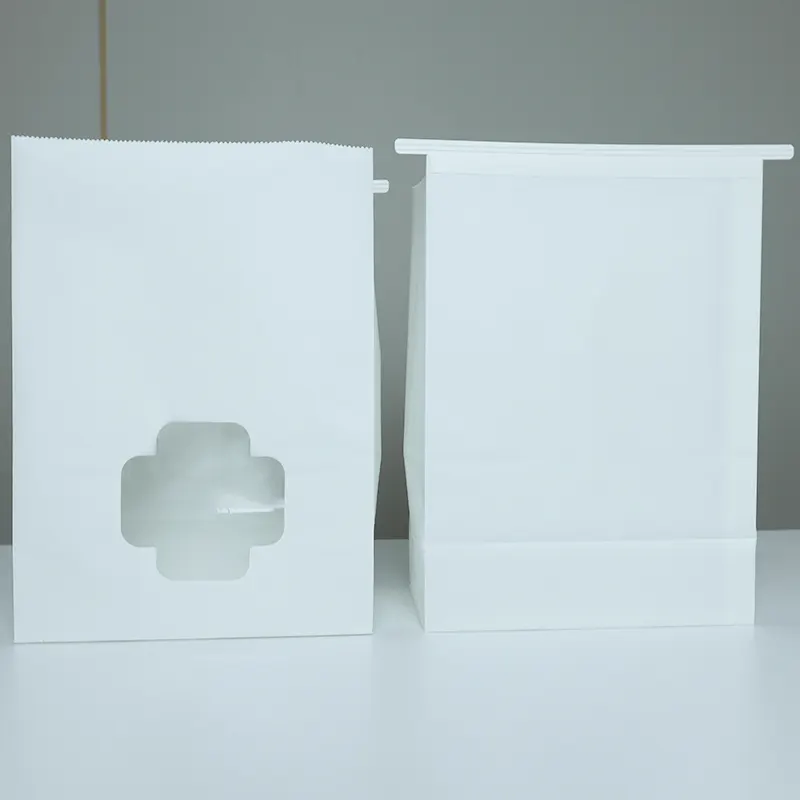
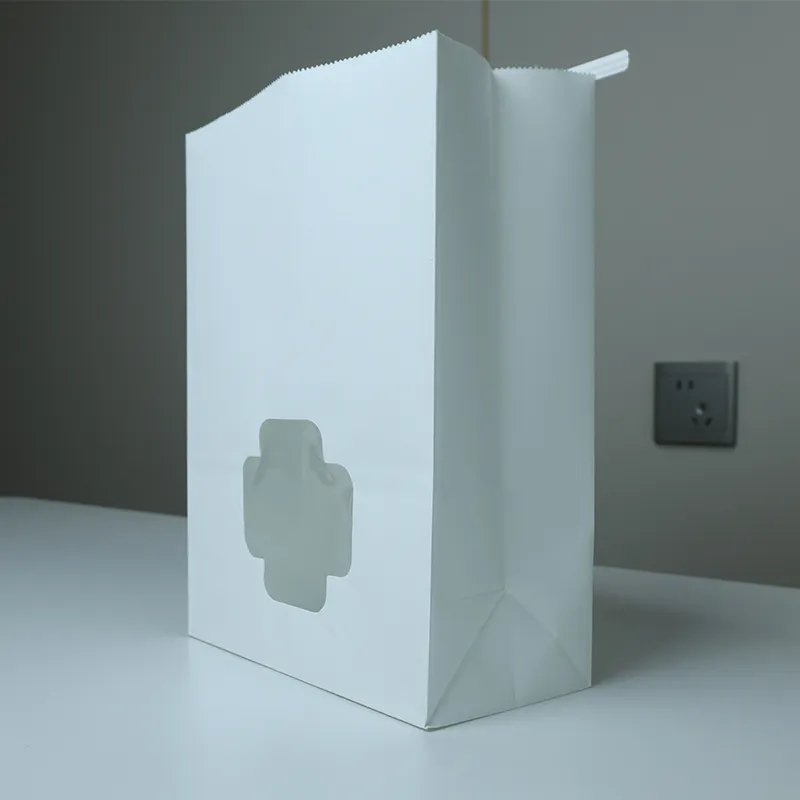
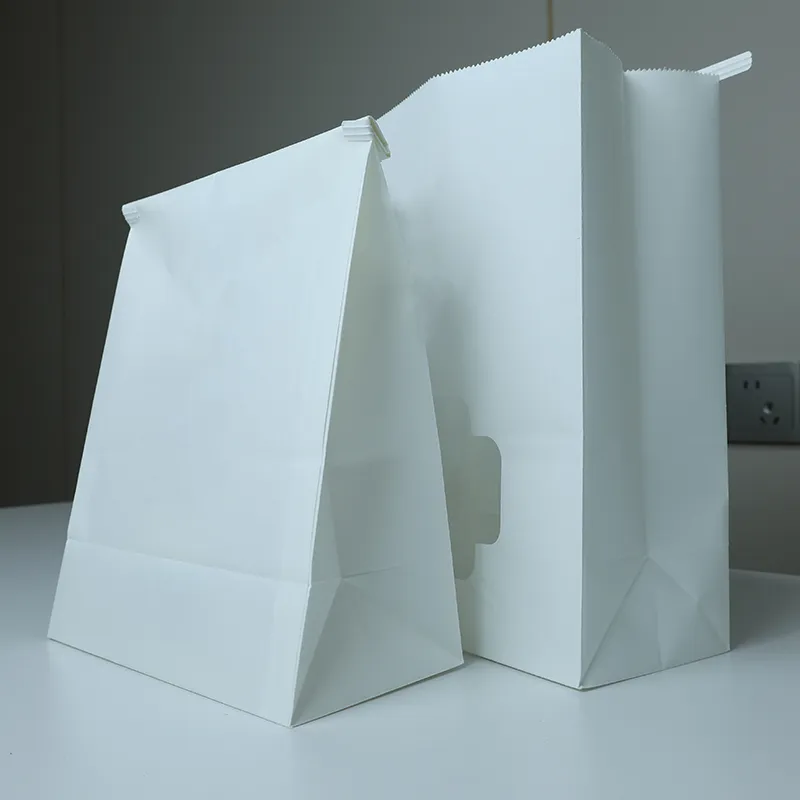
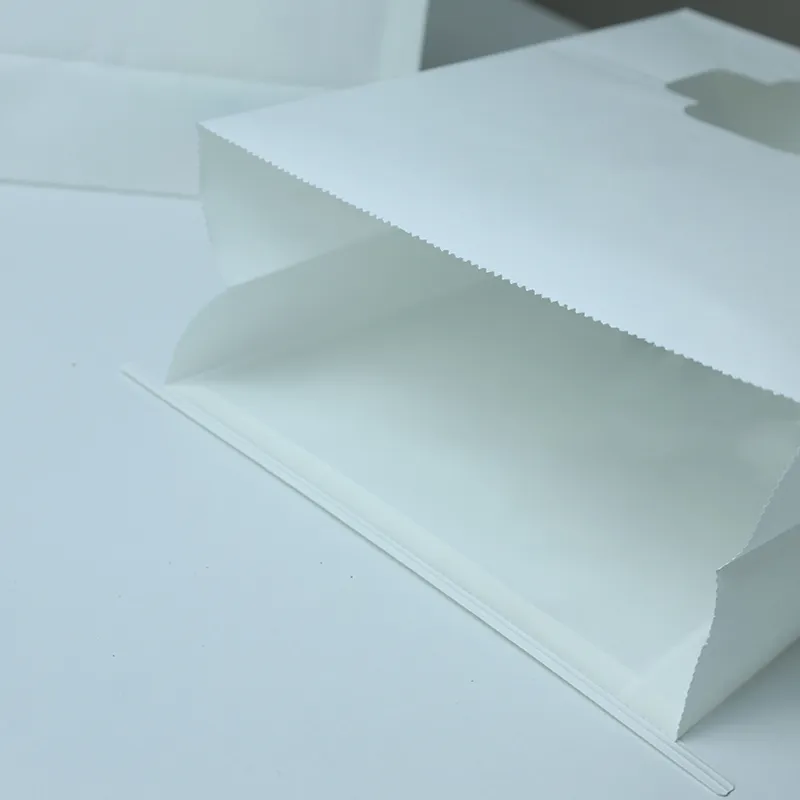
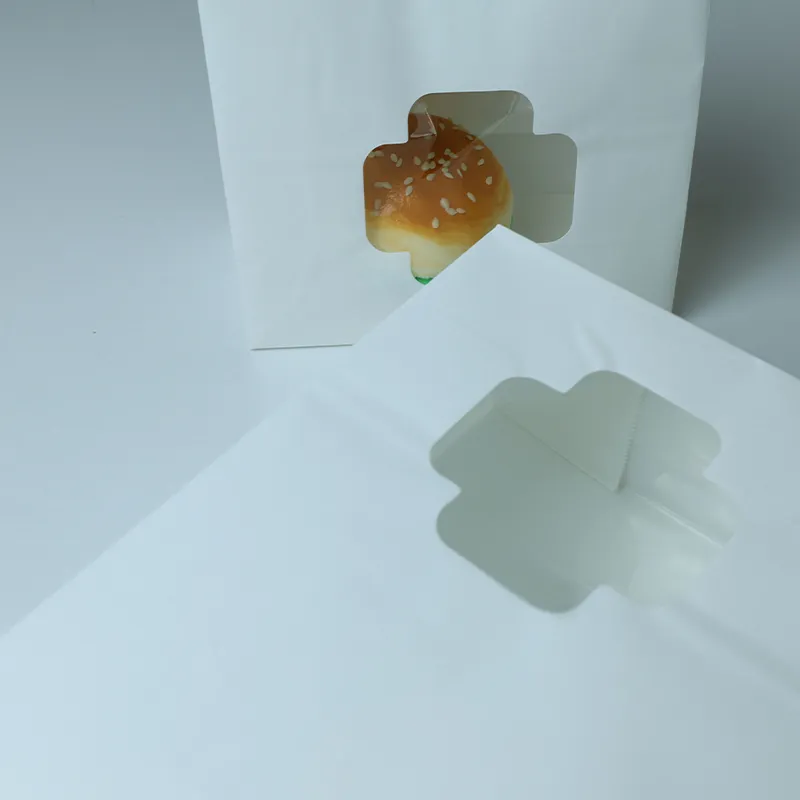
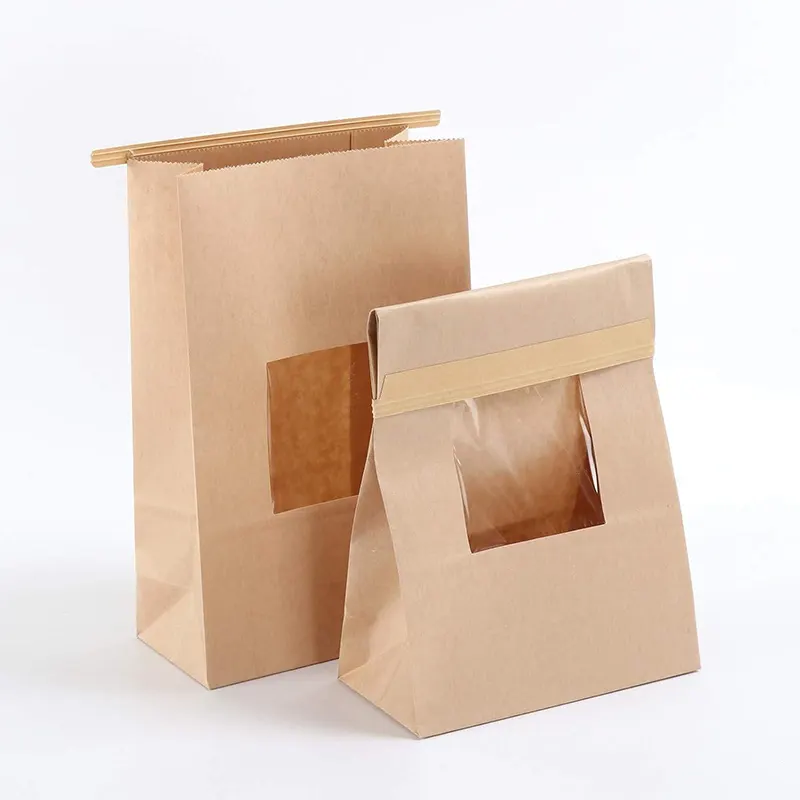
Our tin-tie bags with a window combine kraft paper, a view of the food inside and a fold-over tin-tie closure. We'll help you work through the bag size, window position and exterior design, with enough space at the top to fold and close the bag.
A window lets customers see the food, while the surrounding kraft paper gives you space for your brand and product information. On a tin-tie bag, the top folds over and is held by the tie. The window, filling level and folded top therefore need to work together.
Whether you're starting a new design or replacing an existing bag, show us how you want the food to sit inside. We can discuss the bag dimensions, closure allowance and window layout before working through the printing details. A filled sample is especially useful for getting those proportions right.
| Specification | Details |
|---|---|
| Bag material | Kraft paper |
| Window | Size, position and material confirmed with the bag design |
| Closure | Tin-tie closure |
| Dimensions | Width, height and base measurements for the bag design |
| Printing | Exterior artwork planned around the window and top fold |
| Packing conditions | Food type, contact time, temperature, grease and moisture |
| Order details | Quantity, packing and delivery requirements confirmed in your quotation |
The full bag height includes the space used by the tin-tie closure. If food reaches too close to the opening, there may be little paper left to make a neat fold. Start with your normal filling level, then allow for the way your team will close the top during packing.
Show the fold in your sample or photograph. It helps us check where the tie sits, how much of the front panel remains visible and whether the printed information could be covered. If customers will open and fold the bag again, mention that too, so we can discuss the design around that handling routine.
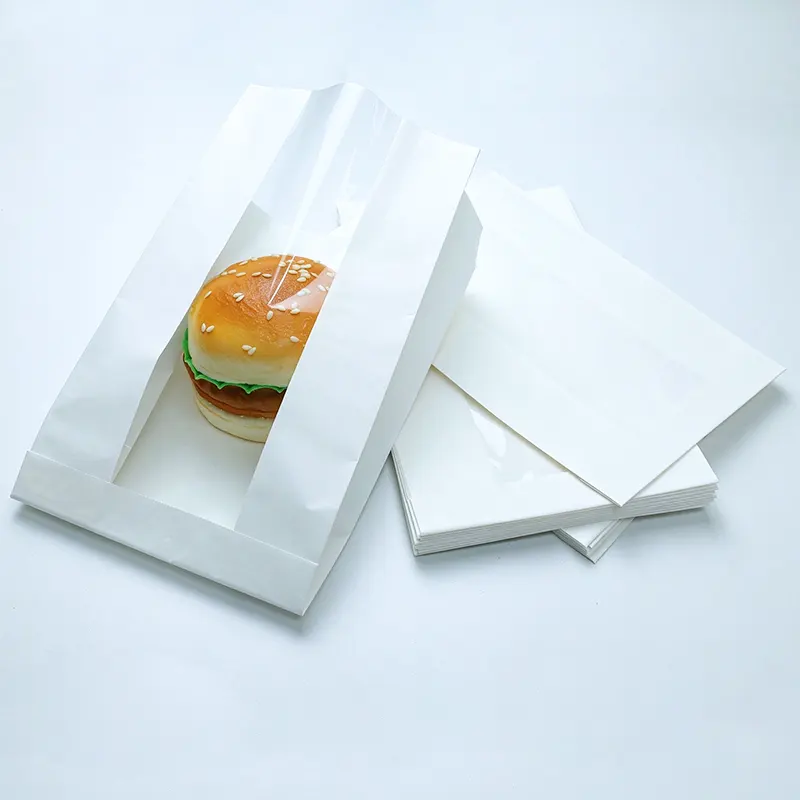
A window looks different on a filled bag than it does in a flat artwork file. For cookies, bakery portions or other foods you're considering, show us the size and usual arrangement. The window should reveal the part you want customers to see at the actual filling level.
Think about the surrounding paper as well. It needs to accommodate the bag structure, the closure and your printed information. Send your preferred window position with the bag dimensions rather than treating it as a separate detail. We can then check the display area against the full layout, including the folds and seams.
Describe the food and how it is packed. Does it touch the bag directly? Is there an inner wrap? Is it warm, greasy or moist when it goes in? These details help us check the kraft paper, window and any specified inner layer for the packaging you need.
The tin-tie holds the folded top, but airtightness and storage life need their own specifications. If you have a particular storage requirement, tell us at the start. We can discuss it against the complete bag construction and closing method, instead of assuming that a tin-tie provides the same result as a sealed pack.
Plan the logo and product name on the paper that stays visible after filling and folding. Keep important text away from the tie, window opening and seams. A clear front panel can help customers see both the contents and the information they need without the two competing for the same space.
Send your artwork and a colour reference with the proposed window layout. If you want a window but are still deciding how the bag should close, compare our Kraft Paper Bags with Window. Let us know that the closure is still to be decided, so we can keep that choice in the design discussion.
Fold the top over and use the tin-tie to hold the fold in place. Leave enough unfilled space for that fold. The exact allowance depends on the bag size and closure layout.
Send the bag height, usual filling level and preferred window position. A photo showing the closed bag will help us check how much food remains visible and where the printed panel should sit.
An existing sample is a good starting point. Include its measurements, a filled photo and any changes you want to make to the window, top fold or artwork.
We can discuss exterior printing on the surrounding paper. Share the artwork at the intended size, and identify the window and top fold so key information stays in view.
Tell us the food, storage conditions and required storage period. Shelf life needs to be checked against the full material structure and closing method; it can't be established from the tin-tie alone.
Send the food type, bag dimensions, normal filling level and preferred window position. Add your artwork, estimated quantity and delivery destination. A filled sample or photo will help us discuss the top fold and display area before preparing the quotation.
Contact our team to discuss your order.
Share a few details and we’ll know where to start.