
Wax paper and grease-proof Paper sit next to each other in the same aisle, look almost identical in the roll, and get used interchangeably in far too many kitchens. They are not interchangeable. One is designed for cold wrapping and the other for heat, and confusing them ranges from a ruined batch of cookies to a smoking oven.
This guide explains what each paper actually is, where the boundary sits, and how to choose — for home cooks and for businesses specifying a wrap.
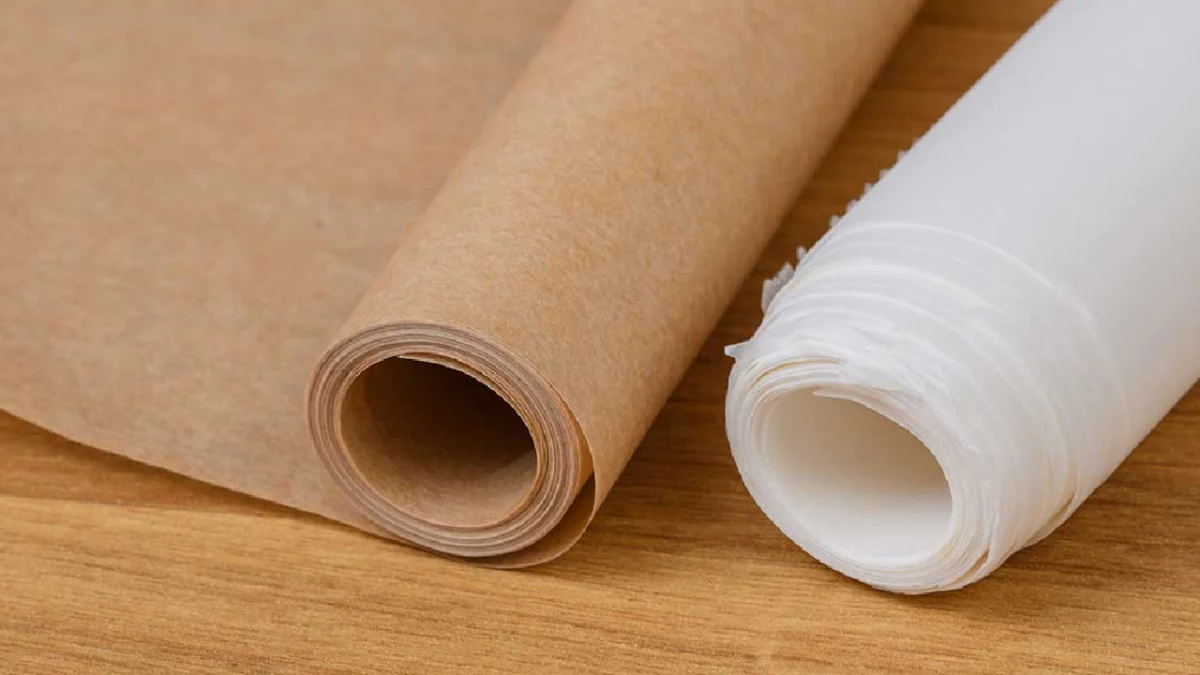
The Short Answer
Grease-proof Paper is coated with silicone and is oven-safe, typically to 425°F (220°C). Wax paper is coated with food-grade wax and is not — the wax melts well below baking temperature.
Use Grease-proof for anything that goes in the oven. Use wax paper for wrapping, separating, and cold storage.
At a Glance
| Property | Wax paper | Grease-proof Paper |
|---|---|---|
| Coating | Paraffin or soy wax | Silicone |
| Heat resistance | Low — wax melts | High — typically 425°F/220°C |
| Oven safe | No | Yes |
| Microwave | Not recommended | Short bursts, usually fine |
| Nonstick | Slight | Strong |
| Best for | Wrapping, separating, cold storage | Baking, roasting, lining |
| Recyclable | Usually not | Depends on the program |
What Each Paper Actually Is
Both start as paper. The difference is the coating, and the coating decides everything else.
Wax paper is thin paper coated on both sides with a food-grade wax — traditionally paraffin, increasingly soy wax. The wax makes it moisture-resistant and slightly nonstick, which is why it works for wrapping sandwiches, cheese, and butter, and for pressing portions flat. It is not designed to take heat: the coating softens, then melts.
Grease-proof Paper is paper treated with silicone, which cures into a slick, heat-stable surface. That is what makes it nonstick and oven-safe. Baking Grease-proof Paper is usually rated to 425°F (220°C); some products claim 450°F (232°C). The rating is on the box, and it should be treated as a ceiling, not a suggestion.
A third product, waxed Grease-proof or “baking paper” in some markets, blends the two ideas — always check the temperature rating rather than the name.
Heat Is the Deciding Difference
Wax melts at around 120–150°F (50–65°C), far below any baking temperature. Put wax paper in an oven and it will soften, smoke, and can ignite if it touches a heating element. It also transfers a waxy film to whatever it touches.
Grease-proof tolerates typical baking and roasting temperatures, but it is not indestructible. Under a broiler, or in contact with an open flame or a hot element, it chars and can catch fire. It is oven-safe, not fire-safe.
That single fact drives most of the practical advice that follows.
Moisture, Grease, and Air
The coatings also behave differently against water and fat. Wax is hydrophobic, so wax paper holds moisture in and keeps grease from striking through — which is why it wraps cheese and sandwiches well. Grease-proof Paper resists grease but is a weaker moisture barrier, and its value in the oven is the nonstick surface rather than the barrier.
Neither is an oxygen barrier, and neither should be asked to protect a product for weeks. For shelf life, aroma, or long distribution, a coated or laminated structure is the right tool; wax and Grease-proof Papers are short-contact materials.
What Happens If You Swap Them
Grease-proof Paper instead of wax: usually fine. Grease-proof Paper is more heat-tolerant than wax, so it can wrap a sandwich or separate burger patties, though it is stiffer and more expensive for that job.
Wax instead of parchment: never in the oven. The paper will smoke, the coating will melt into the, and at high heat it becomes a fire risk. In a microwave, wax paper can soften and stick; it is not recommended.
This asymmetry is why the safe rule is simple: when in doubt, use parchment for heat and wax for cold.
Best Uses for Parchment Paper
- Lining baking sheets for cookies, pastries, and roasted vegetables;
- Lining cake tins and loaf pans;
- En papillote — steaming fish or vegetables in a sealed parcel;
- Roasting at high heat without sticking;
- Separating layers of baked goods for storage;
- Dehydrating and drying.
Parchment can often be reused two or three times for dry baking before it darkens, provided it stays clean and greasy spots are avoided. It is not reusable after a greasy roast.
Best Uses for Wax Paper
- Wrapping sandwiches, burgers, and burritos for service;
- Wrapping cheese, butter, and deli items;
- Separating portions before freezing;
- Rolling and pressing dough without sticking;
- Lining drawers and shelves;
- Protecting surfaces during messy tasks.
Wax paper’s moisture resistance is its advantage: it keeps bread and cheese from drying out in a way parchment does not. In takeaway service, the same sheet becomes wrapping paper: it holds a burger together, resists grease, and prints well enough to carry the brand.
Microwave and Oven Rules
- Wax paper: not microwave-safe and never oven-safe. The wax melts and can transfer to.
- Parchment: generally safe for short microwave reheating, but avoid it for long cooking or anything that could scorch. In the oven, stay within the printed temperature rating and keep it away from elements and flames.
- Neither belongs under a broiler or on a direct flame.
Safety and Coatings
Both coatings are food-grade when sold for kitchen use, but the details differ:
- Paraffin wax is food-safe in cold applications; the concern is heat, not toxicity at room temperature.
- Soy wax behaves similarly and is preferred by some buyers for sourcing reasons.
- Silicone on parchment is inert and heat-stable; look for food-grade certification and avoid parchment with added dyes or scents for high-heat use.
- Greaseproof paper is a different product again — denser, not coated, and often used for wrapping rather than baking. Whether it can be recycled depends on how it was made; the coating question has its own answer.
For businesses, the coating is only one line in a wider packaging materials specification: a declaration of compliance, migration testing where required, and a supplier who can document both.
Sustainability
Both are usually single-use, and both are hard to recycle at kerbside because of their coatings.
- Wax paper is generally not recyclable in municipal programs, though some waxed papers are compostable at home or industrially — check the brand.
- Parchment is often marketed as compostable, since silicone-coated paper can break down in commercial composting; kerbside recycling acceptance varies widely.
- Reusable alternatives — silicone baking mats, beeswax wraps, and washable liners — beat both on lifecycle impact when used often enough.
The greener choice is usually the one used less: a silicone mat replaces hundreds of parchment sheets.
For businesses, the decision is often settled by the coating declaration rather than the disposal route — what the paper is coated with, what it is certified for, and whether the supplier can document both.
Buying and Storage
- Check the temperature rating on parchment, not the brand name.
- Buy the width you bake with — a roll that is too narrow wastes more than it saves.
- Store flat or in the box; creased parchment is harder to line a tin with evenly.
- Keep wax paper away from heat, including the top of the stove and direct sun.
- Proof before you commit — if the wrap carries your logo, ask for a print proof on the actual coated stock, because custom printing behaves differently on waxed and silicone surfaces.
FAQ
Can I use wax paper instead of parchment paper?
Only for cold uses. Wax paper melts in the oven and is not microwave-safe.
Can I use parchment paper instead of wax paper?
Yes for most cold wrapping and separating tasks, though it is stiffer and more expensive.
Is parchment paper the same as baking paper?
In most markets, yes — “baking paper” is a general term, usually silicone-coated parchment. Check the temperature rating.
Is wax paper microwave-safe?
No. The wax can melt and transfer to.
Is parchment paper compostable?
Many parchment products are compostable in commercial facilities; kerbside recycling depends on local rules.
What temperature is parchment paper safe to?
Typically 425°F (220°C), with some products rated to 450°F (232°C). Never use it under a broiler or over a flame.
Can parchment paper go in an air fryer?
Only if it is rated for the temperature and weighted down so it cannot lift into the heating element. Loose parchment is a fire risk in an air fryer.
Is wax paper the same as greaseproof paper?
No. Greaseproof paper is denser and uncoated, so it resists fat without a wax layer; wax paper is coated and not heat-safe.
The Bottom Line
Wax paper and parchment paper differ in one decisive way: wax melts, silicone does not. Everything else — the wrapping, the baking, the safety rules — follows from that.
Keep both if you cook and pack regularly: wax for cold wrapping and separation, parchment for anything that sees heat. Never substitute one for the other in the oven, and always read the temperature rating before the first batch. If you are specifying a wrap for a business, talk to our team about the coating, the print, and the compliance file.